
In the field of superhard material processing, especially when facing PCD, CVD diamond, and cemented carbide (TC), the game between processing accuracy and efficiency has never stopped. Many tool manufacturers often have doubts about the "absolute accuracy" and "consistency" of machining when transitioning from electrical discharge machining (EDM) to laser processing.
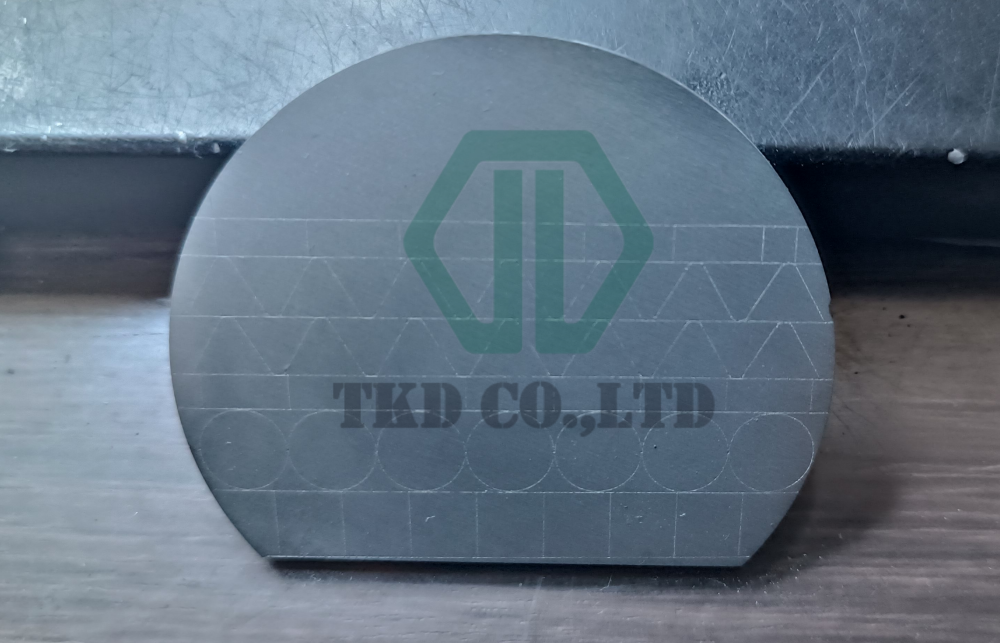
Based on years of technical accumulation from TKD CO., LTD, our TKD-300F laser cutting machine is specially developed for brittle and hard materials. We have analyzed 10 practical issues that customers are concerned about, such as verticality, tolerance control, and thermal drift, through data analysis.
1. Accuracy and tolerance: Challenge the limit of 0.002mm
Customers often ask: "Can laser cutting achieve a tolerance of 0.002mm? ”Objectively speaking, in long strokes of 10mm or more, the stable industrial tolerance of laser cutting is usually maintained at around 0.005mm. But on the TKD-300F, driven by a precision linear motor, it is indeed possible to approach 0.002mm in small-sized (within 5mm) blade machining. This not only requires extremely high laser quality, but also depends on the dynamic shock absorption performance of the machine base.
2. Verticality and taper: Say goodbye to "secondary precision grinding"
Traditional laser cutting is often accompanied by a significant taper, resulting in excessive lateral back angle. TKD-300F adopts multi axis linkage rotation technology. For standard PCD composite chips with a thickness of less than 3.0mm, we can control the cutting taper within a very small range, and the cutting surface is flat. In most cases, it can be directly used for welding or coating without the need for complex precision grinding processes, greatly reducing labor costs.
3. Material utilization rate and edge quality
In the face of expensive superhard materials, every micrometer of loss is a cost.
• Kerf loss: Our beam quality is excellent, and the kerf can be compressed to 0.05mm-0.08mm.
Micro cutting: Through short pulse laser technology, we control the cutting edge's cutting edge to within 2 μ m. Under a microscope, the edge lines are extremely sharp, which is crucial for processing precision parts of ruby or sapphire.
4. Solve the problems of "thermal drift" and "contact marks"
The stability under long-term continuous operation is the "touchstone" of machine tools. The TKD-300F is equipped with a circulating gas cooling system internally, effectively suppressing the center drift of the laser head caused by environmental temperature differences. For complex contours such as R-angles and irregular blades, our control algorithm can automatically perform radius compensation to ensure that the center of the laser beam is always on the optimal trajectory.
In addition, TKD has developed a Ramp in/out algorithm to address the issue of "contact marks" between the cutting starting point and the cutting point. This algorithm eliminates obvious physical cuts at the software level, resulting in extremely high optical consistency on the surface of the workpiece.
5. Consistency for large diameter composite sheets (such as 74mm)
It is often difficult to control the cutting consistency between the center and edge positions on a single 4mm PKD composite sheet. The TKD-300F adopts a large amplitude precision platform, ensuring equal optical path length or automatic focus compensation throughout the entire stroke. No matter where the parts are located, there is almost no visible difference in the quality of the cut.
Recently, Italian customers have been using TKD-300F to process PCD composite wafers, and the average data for 30 consecutive days of mass production is as follows:
Item | Parameter Value |
Dimensional tolerance | ±0.005mm |
Consistency of Full Area Processing for 74mm PCD | ≤0.002mm |
Cutting taper | ≤0.5° |
Cutting Kerf | 20~30μm |
Microscopic edge fracture | ≤1.8μm |
Precision of complex contour profiling | ±0.002mm |
Trajectory trace | ≤1μm |
Beam radius compensation | Built in automatic compensation module |
24-hour continuous operation thermal drift deviation | ≤0.0015mm |
0.5mm/8mm thin sheet with poor accuracy | ≤0.001mm |
TKD-300F is not just a cutting device, it is a "precision surgical knife" tailored for the superhard material industry. From precision gaskets as thin as 0.5mm to mining composite sheets as thick as 8.0mm or more, it exhibits strong adaptability. If you are seeking to improve material utilization and reduce subsequent processing steps, TKD's laser technology will be your wise choice.
We are committed to providing the ultimate solution for superhard material processing to global customers. For more information about precision laser cutting or PCD/CVD processing, please feel free to contact us at any time.



 Whatsapp/wechat